
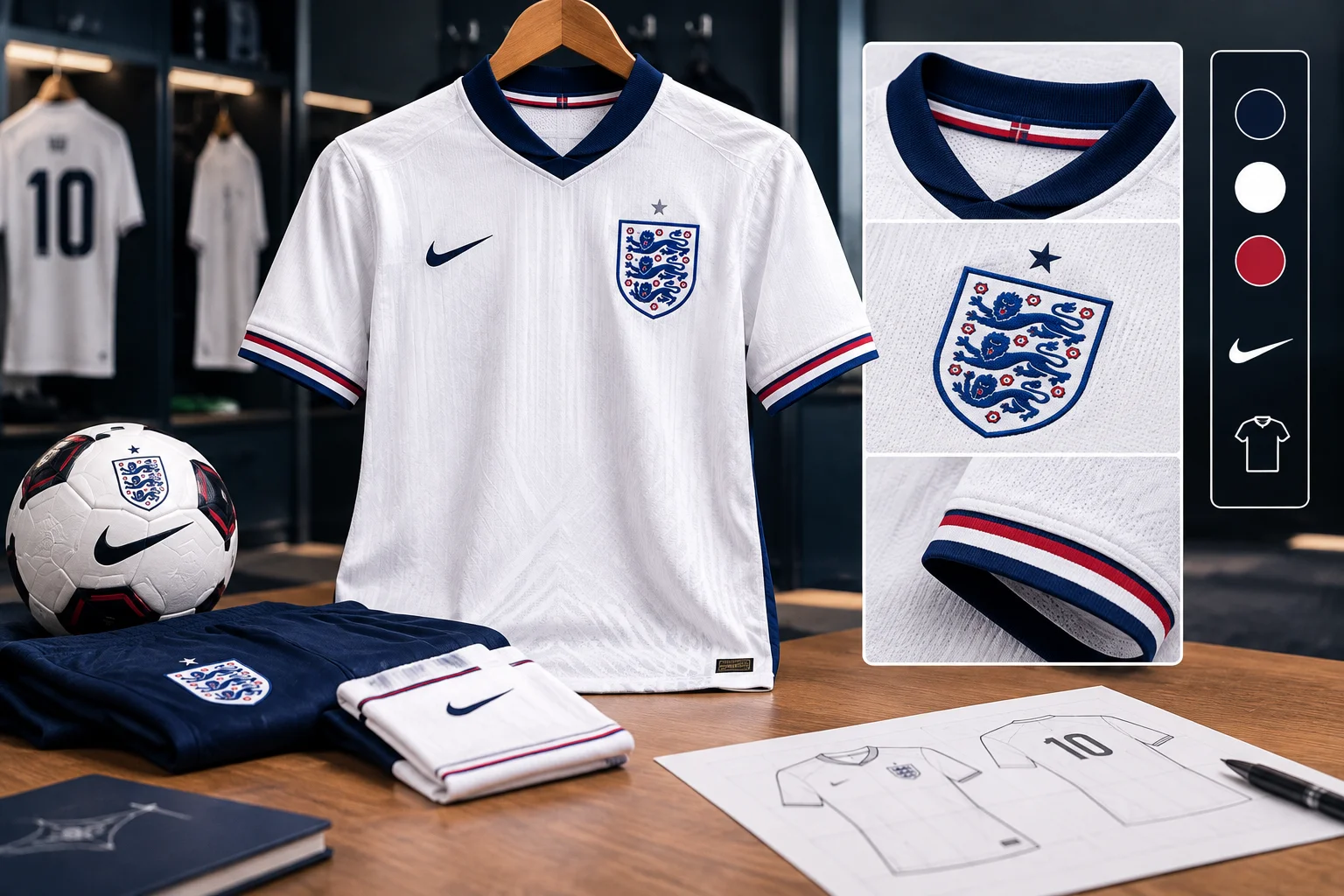
International kits follow different rules from club kits. They run on tournament cycles rather than seasons, they are produced in bursts rather than continuously, and the design pressure sits in different places. All of that changes what you should check and when you should buy.
The white home shirt adds its own set of demands on top, since white is the least forgiving colour to produce well.
How does the release cycle differ from club kits?
Substantially, and it is the most useful structural thing to understand.
Club kits follow an annual cycle. New home shirt every summer, away and third alongside it, with reductions starting after the new year and becoming serious in spring as sellers clear stock before the next release. That rhythm is dependable.
International kits do not work that way. They are typically released around major tournaments and frequently run for two years or more. A shirt stays current for considerably longer, the pressure to replace it is weaker, and the discount pattern follows the tournament calendar rather than the football season.
The practical consequence is that the cheapest moment to buy an england football kit is generally the year after a tournament, once the cycle has turned, rather than at any fixed point in the year.
Why is white so demanding to produce?
Because it conceals nothing, and every production economy is visible.
Uneven dye uptake shows. Variation in fabric weight between panels shows. Thin patches in the knit show against light. Any inconsistency in finish shows. On a coloured shirt these get absorbed into the overall appearance. On white they do not.
White also ages fastest. Poor quality white polyester develops a grey cast through repeated washing and does not recover. A well made white shirt stays white for years. A badly made one looks tired within a season, which is a shorter life than most buyers expect.
What should you check on a white shirt?
Three things, in order.
Opacity first. Hold it to a light source. If you can read shapes through it, the knit is lighter than a quality shirt should be. This is the single most common shortcoming at the cheaper end and it is immediately testable.
Panel consistency second. Lay it flat and compare the white at the sleeve against the body and any side panels. They should be indistinguishable. Tonal differences mean mixed dye batches.
Crest construction third. Against white, a heat pressed badge shows a faint rectangular outline where the backing film ends, visible in ordinary light. Embroidered and properly bonded crests do not.
Does the red trim create problems?
It is the most demanding boundary on the kit and the place dye instability appears.
Red is among the least stable dyes and it sits directly against white on this kit. Look closely at the edge between any red trim and the white body. It should be a clean line with no bleed and no pink halo.
Softness at that boundary means the dye has not been properly fixed and will keep transferring in the wash. On a predominantly white shirt that is progressive rather than cosmetic, and it is worth checking before the first wash rather than after.
How do you date an England shirt?
The markers are the same as for club shirts but the blocks are longer, which makes it easier in some ways and harder in others.
The manufacturer is the primary marker, since kit supply contracts for national teams run in long blocks and are well documented. The crest treatment is the second. The collar is the third, and because international kits run for two years or more, collar changes separate cycles rather than seasons.
There is no shirt sponsor on an international kit, which removes the marker that is usually most useful on a club shirt. That is why the manufacturer and the tournament association carry more weight here.
Are away shirts worth more attention?
Historically yes, and it is worth knowing if you are buying for interest rather than for wearing.
England’s away kits have carried the more adventurous design decisions across most periods, using colours and treatments the home shirt could never risk. Several are considerably more distinctive than the home shirts of the same cycle.
They are also produced in smaller numbers, which compounds over time. The combination of design interest and lower production is what keeps a shirt worth having decades later.
Are kids’ versions specified differently?
They are, and the differences are worth knowing if you are buying for a child.
Children’s international shirts are sized by age range, which really encodes a height range, and the age label is far less accurate than the height figure underneath it. Check the height rather than the age, and size up once at most if your child is near the top of their current range.
Construction also differs in ways that matter. Children’s shirts get played in rather than watched in and washed far more often, so crest attachment matters more, not less. A heat pressed badge on a child’s shirt has a hard life and lifts at the corners quickly.
What about reproductions?
The market for older England shirts is unusually active, which means reproductions of the famous designs are widespread.
Distinguishing them comes down to construction rather than appearance. Fabric weight separates eras broadly, since heavy cotton, early polyester and modern engineered knits feel quite different. Label construction is the second marker, and stitching method the third.
A listing that is vague about whether a shirt is original or reproduction is worth clarifying before purchase. A well made reproduction is a perfectly good thing to own. It is simply a different purchase from an original, and the prices should reflect that.
The specification summary
Buy the year after a tournament rather than during one. Test opacity against a light source. Check panel consistency and the crest backing edge. Examine the red trim boundary before the first wash. Use the manufacturer rather than a sponsor to date it. And clarify original versus reproduction before paying.
Verifying a club shirt follows the same logic with different markers, and our guide to checking a Spurs shirt against its description works through it. For a club kit that spans an unusually long era, Everton jerseys from Dixie Dean to the new stadium covers the dating problem.
Frequently asked questions
How often does the England kit change?
Less often than club kits. International shirts typically run for two years or more and are released around tournament cycles rather than on the annual club calendar.
When is the cheapest time to buy an England shirt?
The year after a major tournament, once the cycle has turned. International kits hold their price through a tournament and drop once the next cycle approaches.
How should I size a children’s England shirt?
Use the height range rather than the age label, since age sizing really encodes height and children vary considerably. Size up once at most, and only if they are near the top of their current range.
How do you date an England shirt without a sponsor?
Use the manufacturer as the primary marker, since national team supply contracts run in long, well documented blocks. Crest treatment and collar style narrow it further within a contract period.