
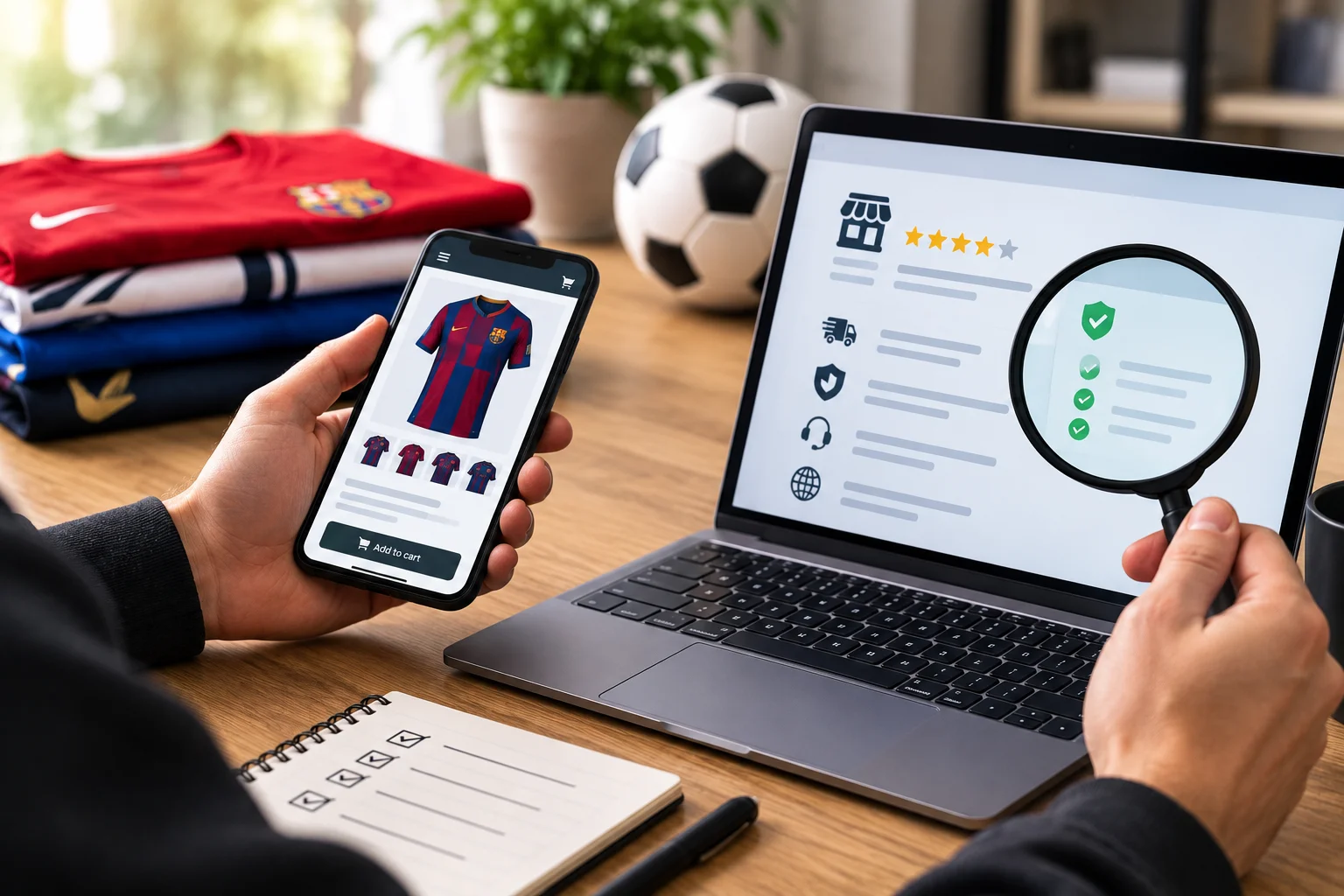
Almost everything that goes wrong with an online shirt purchase is predictable from the listing. Not always obvious, but predictable, because sellers reveal a great deal about their operation through what they choose to show and what they leave out.
Learning to read those signals is more useful than any individual product recommendation, because it works on every listing you will ever look at.
What does the photography tell you?
More than anything else on the page.
A seller photographing their own stock produces images with consistent lighting, multiple angles, and detail shots of the crest and stitching. That costs time, and a seller spending time on it is a seller who has seen what arrived from their supplier and is willing to show you.
A seller using only manufacturer render images or bare flat lays on white backgrounds is showing you a representation rather than the product. That is not automatically dishonest, but it means you cannot assess the crest, the stitching or the fabric, which are the three things that determine whether the shirt is any good.
For anyone buying cheap football shirts online, the presence or absence of a close up crest photograph is the single most informative detail on a listing.
Does consistency across the range matter?
Considerably, and it is easy to check.
Look at several shirts from the same club across a seller’s listings. The colours should be consistent. If one Chelsea shirt is a deep royal and another is noticeably lighter, the stock is coming from mixed sources.
Look at the photography style too. A seller whose images are consistent has one supply chain and one process. A seller with wildly varying image quality across their range is aggregating stock from wherever it is available, which makes what arrives unpredictable.
What should a listing actually contain?
Four things, and their absence is informative.
Measurements, published as numbers rather than only size letters. A returns policy stating the window and who pays return postage. A statement of where the item ships from. And a way to contact someone before ordering.
None of these is difficult to provide. A seller who provides all four has thought about the transaction from your side. A seller who provides none has not, and while that does not mean the shirt will be bad, it does mean you have no recourse if it is.
How do you spot an inflated original price?
By checking whether the discount is real, which is easier than it sounds.
A listing showing a large reduction from a reference price is only meaningful if that reference price was ever charged. Compare the discounted price against several other sellers for the same shirt. If it sits in the same range as everyone else’s normal price, the reduction is presentational.
This matters less than it might, since what you pay is what you pay. But a seller relying heavily on presentational discounting is telling you about how they operate, and that is worth factoring in alongside everything else. Following the kit release calendar through talkSPORT’s football coverage makes it easier to judge when a genuine end of cycle reduction is actually due.
What do the reviews actually tell you?
Look at the complaints rather than the praise, and look at how they were handled.
Positive reviews mostly tell you shirts arrive, which is a low bar. The useful information is in what goes wrong and what the seller does about it. A seller with occasional sizing complaints resolved quickly is a normal business. A seller with repeated complaints about crests lifting or colours being wrong has a supply problem.
Volume matters too. A handful of reviews tells you very little either way, and recent reviews are more informative than old ones, since suppliers change.
What are your rights if something goes wrong?
Distance selling rules generally give you fourteen days from receipt to cancel and a further fourteen to return the goods, regardless of what the seller’s own policy states. That applies to online purchases as a baseline.
The exception is personalisation. A shirt printed with a name and number has been made to your specification and the automatic cancellation right does not apply, which is why sizing needs settling before you commit to printing.
Paying by credit card adds a layer of protection above a certain value on top of your statutory rights, which costs nothing and is worth doing with an unfamiliar seller.
How much should delivery cost affect your choice?
More than most people allow for, because it is charged per order rather than per item.
Many sellers apply a shipping rate to the first item and a reduced rate to each additional one, which rewards consolidating purchases substantially. If you know you want two shirts across the next few months, buying them together frequently saves more than any discount code.
Free delivery thresholds work on the same logic. If free shipping starts above a certain spend and you are close to it, adding something inexpensive often costs less than paying the delivery fee outright. It is an obvious point that a surprising number of buyers miss at checkout.
What about shipping origin and duty?
Check it before ordering, because it changes the total.
A shirt shipping from UK stock arrives without customs involvement. One shipping from abroad may attract duty plus a courier handling fee on arrival, which can close the gap between a cheap listing and an expensive one entirely or reverse it.
Some sellers include duties in the listed price. Some do not. The listing should say, and if it does not, that itself is worth noting.
The seller checklist
Own photography with crest close ups. Consistent colour across the range. Published measurements. A clear returns policy naming who pays postage. A stated shipping origin. A contact method. Recent reviews where problems were handled properly.
Seven signals, all readable in a few minutes, and together they predict what arrives far better than the price does.
The England kit brings its own specification questions, and our guide to what changes across its release cycle covers them. For how printing and numbering fit into all this, Newcastle United jerseys and the number nine touches on the same ground.
Frequently asked questions
What is the best way to judge an unfamiliar seller?
Their own photography, particularly whether they show close ups of the crest and stitching. Own photography means they have seen the stock. Manufacturer renders mean you cannot assess what will arrive.
Do I have a right to return a football shirt bought online?
Generally yes, fourteen days from receipt to cancel with a further fourteen to return, under distance selling rules. Personalised shirts with printing are the main exception.
Is it worth ordering several shirts at once?
Usually. Shipping is frequently charged at a full rate on the first item and a reduced rate on additional ones, so consolidating purchases can save more than a discount code would.
How do I avoid unexpected customs charges?
Check where the item ships from before ordering. UK stock avoids customs entirely. For international shipments, confirm whether duties are included, and allow for courier handling fees if not.