
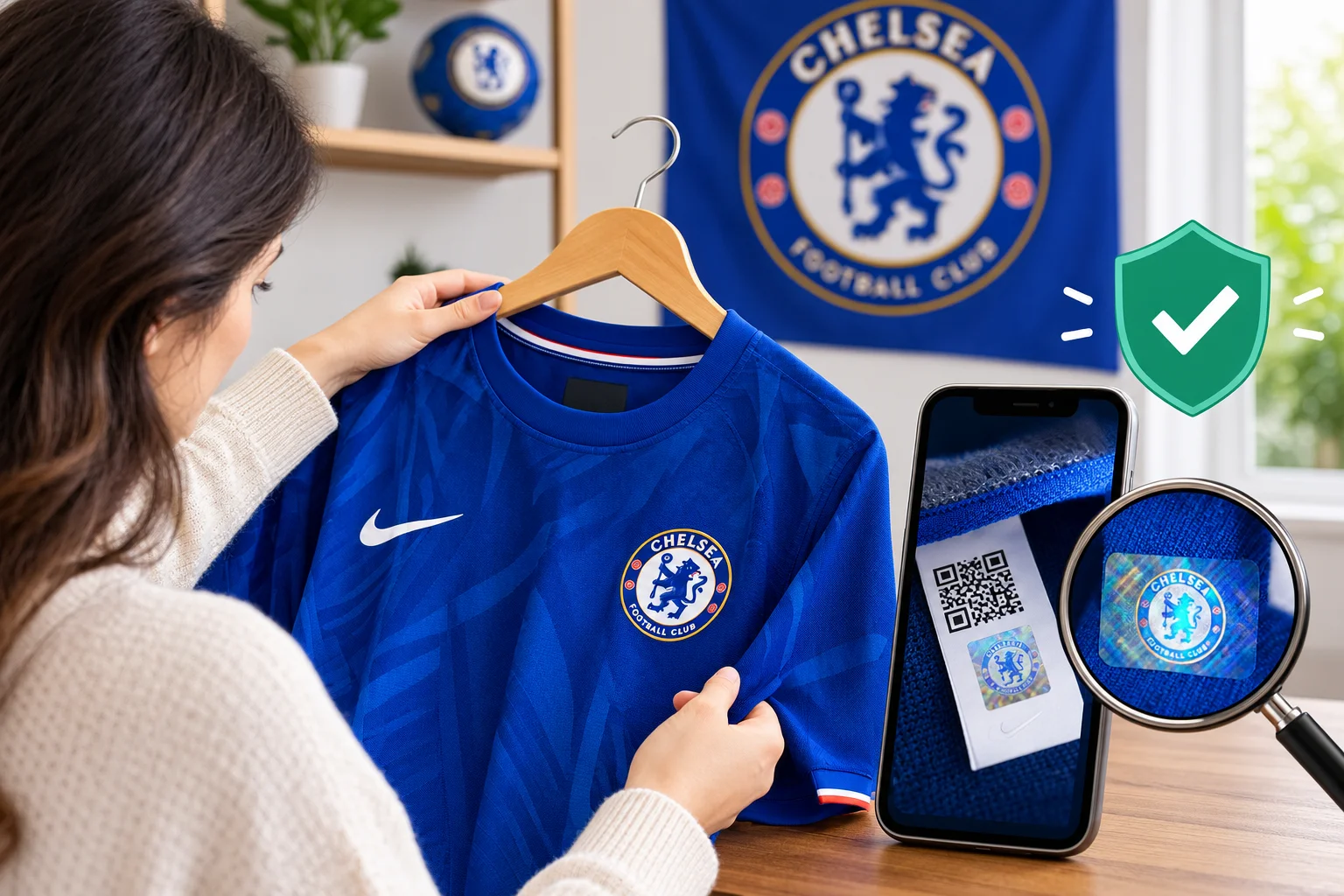
Chelsea’s blue has moved around more than most clubs’ colours, which makes their shirts unusually good at revealing whether a seller knows what they are doing. A listing describes a shirt; the parcel contains one; most of the time they match, and when they do not, it is usually the season or the shade rather than anything dramatic. Knowing how to check means you can say precisely what is wrong if it is, which gets problems resolved far faster.
Why does the blue matter so much?
Because it has changed, and that makes it a test.
Chelsea’s blue has been a deep royal, a brighter shade, and at points something closer to a mid blue, depending on the manufacturer and the year. Each version is legitimate; they are just different. That variation is the most useful thing about the shirt when you are checking a seller. Anyone comparing chelsea football shirts across listings should check whether the shade holds consistent from one to the next, and whether sleeves match the body within a single shirt.
Variation between seasons is normal. Variation inside one garment is a production fault, and faults rarely occur alone.
How do you confirm the season?
Four markers, in order of how much each narrows the range.
The sponsor first, since deals run in multi-year blocks and pin a shirt to a window immediately. The manufacturer’s mark second, which changes on its own cycle and cross-references usefully. The crest third, since Chelsea’s badge has been through several distinct versions. The collar fourth, which changes more often than anything else and usually separates seasons within a sponsorship period.
A shirt where all four agree is almost certainly what it claims. One where a marker disagrees is worth a question to the seller before you accept it.
What should you check first when it arrives?
The crest, because it tells you most about how the shirt was made.
An embroidered crest shows thread texture and sits into the fabric. A properly bonded crest sits flush with clean edges. A heat pressed badge shows a faint outline where the backing ends and lifts at the corners within months. The question is not which is better in the abstract but whether it matches what was described. A shirt sold as a quality replica with a heat pressed badge has not been listed accurately.
Also check the crest version against the claimed season, since a mismatch between badge and stated year is the clearest sign a shirt is not what the listing says.
Are older Chelsea shirts sized differently?
Yes, noticeably, which matters for anything vintage.
Shirts from the 1990s and earlier were cut much looser than modern kits, so a large from thirty years ago can fit like an extra-large today. That makes measuring against the actual garment even more important for older shirts, since the size letter means something different depending on the era. Always buy an older shirt on its measurements rather than assuming the label matches modern sizing.
How do you verify the size?
Measure rather than trust the label.
Lay the shirt flat, smooth it out, and measure straight across from one armpit seam to the other. That half chest figure should match what the seller’s chart said for the size you ordered, within a centimetre or two of normal tolerance. Several centimetres of difference means either an inaccurate chart or a shirt labelled as a size it is not. Measure body length as well, from the base of the collar to the hem, since a shirt can be correct across the chest and wrong in length.
If you bought a player version rather than a replica, the measurements will be smaller, and a seller who lists both should publish separate charts.
What about older and vintage shirts?
The same checks, with condition added.
For anything sold as retro or vintage, check the fabric for pilling, the printing for cracking, and the seams for fading, none of which affects a new shirt. Ask for photographs of the actual item rather than a stock image, and treat a seller who cannot provide them with caution. Construction separates an original from a reproduction: fabric weight, label style and stitching method differ between eras in ways reproductions rarely copy exactly, which matters when the price reflects a claim of authenticity.
What about the fabric?
Appropriate to what was described.
Modern replica construction uses a light engineered knit with visible texture. Player version construction is lighter again, with more aggressive ventilation and frequently bonded rather than stitched seams. A shirt sold as a player version that has conventional stitched seams and replica-weight fabric is a replica, which is a specification mismatch rather than a quality problem, and one of the more common discrepancies in the market.
Does the kit change much between seasons?
On the home shirt, less than the marketing suggests.
Chelsea’s home shirt is always blue, and the changes between years are confined to the collar, the trim, the shade of the blue and small fabric details. That makes the home shirt date slowly in appearance and quickly in status: two seasons on it still looks right, but anyone who follows the club can place it. The away and third kits change far more dramatically, which is why they are easier to tell apart and why the distinctive ones hold their value longer.
For a buyer, the practical point is that last season’s home shirt is near indistinguishable from the current one and considerably cheaper.
What if it does not match the listing?
Photograph the specific issue before wearing or washing, and describe it precisely.
A message identifying that the crest is heat pressed where embroidery was described, or that the half chest measures four centimetres under the chart, gets dealt with far faster than a general complaint. Under UK distance selling rules you generally have fourteen days from receipt to cancel and a further fourteen to return, with personalised shirts the main exception.
For the same checks on an international shirt, our England football kit specification guide covers how the markers differ when there is no sponsor to help.
Frequently asked questions
Why do Chelsea shirts vary in shade of blue?
Manufacturers and dye formulations have changed over time, and each interprets the blue slightly differently. Variation between seasons is normal; variation within a single shirt is a production fault.
How do I know which season a Chelsea shirt is from?
Check four markers together: sponsor, manufacturer’s mark, crest version and collar. A shirt where all agree is almost certainly correct; one where a marker disagrees is worth querying.
How do I check a Chelsea shirt is the right size?
Measure it flat across the chest, armpit seam to armpit seam, and compare to the seller’s chart for the size you ordered. Differences of several centimetres mean a mislabelled shirt or an inaccurate chart.